

In today’s digital world, consumers are more skeptical than ever. They compare brands, search for alternatives, read feedback, and only trust what feels authentic. This shift in behavior has made social proof one of the most powerful elements in modern marketing. Whether it’s customer reviews, user-generated content (UGC), testimonials, or real-time social media feeds, social proof can significantly influence buying decisions and push customers toward making a purchase.
This blog explains why social proof is so influential, how different types of social proof work, and how brands can turn reviews and UGC into real sales.
What Is Social Proof?
Social proof is a psychological phenomenon where people rely on the opinions, actions, and experiences of others to make decisions. In marketing, this means potential buyers are more likely to trust a product or brand when they see other people using, enjoying, or recommending it.
Think about the last time you bought something online. Chances are, you read reviews, watched a video of someone using the product, or checked ratings. That’s social proof in action.
Why Social Proof Matters Today
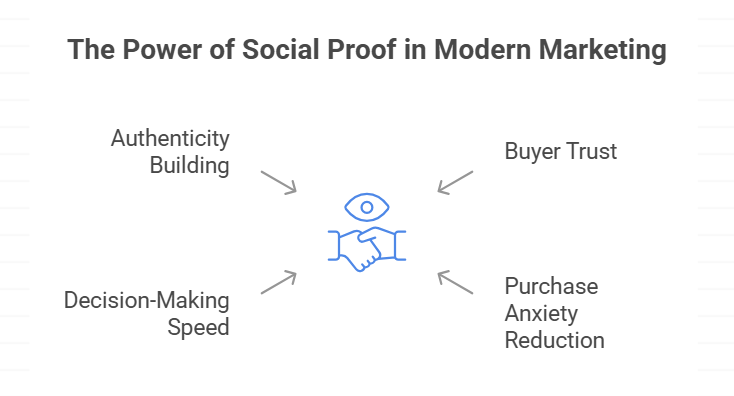
1. Buyers Trust People More Than Brands
Traditional marketing is becoming less effective. Modern buyers trust real people more than polished brand messages. They rely on customer opinions, not company claims.
UGC, reviews, and testimonials show real experiences, real results, and real value, something brand ads cannot replicate.
2. Social Proof Reduces Purchase Anxiety
When customers see others recommending a product, it eliminates doubts and builds confidence. Reviews, photos, and ratings answer questions that product descriptions often miss.
3. Social Proof Speeds Up Decision-Making
Online shoppers face endless choices. Because of that, many of them experience “decision fatigue.” Social proof acts as a shortcut, helping customers quickly decide which product is trustworthy and worth buying.
4. Social Proof Builds Authenticity
Authenticity drives conversions. Social proof showcases your real customers and their real voices, making your brand feel genuine and relatable.
Types of Social Proof That Drive Sales
Not all social proof is equal. Some forms build trust instantly, while others support long-term brand credibility. Here are the most effective types:
1. Customer Reviews & Ratings
Customer reviews are one of the strongest forms of social proof because they are straightforward, honest, and relatable.
Reviews help new customers understand:
- Product quality
- Real experiences
- Common pain points
- Whether a product is worth the price
According to widely cited google reviews statistics, customers are far more likely to trust a business with a large number of positive ratings, and many shoppers won’t consider buying from a brand with zero reviews.
The Benefits of Google Reviews
The benefits of google reviews extend beyond trust building. They also improve local SEO, increase visibility on search results, and make your business appear more credible to new buyers.
2. User-Generated Content (UGC)
UGC includes photos, videos, testimonials, and posts created by actual customers. It’s incredibly powerful because it feels authentic and real.
Examples of impactful UGC:
- A customer posting an unboxing video
- A traveler sharing photos from a hotel stay
- Someone posting a product review on Instagram
- A TikTok user showcasing how a product works
UGC helps potential buyers see themselves using your product, which is often the final push they need before purchasing.
3. Social Media Feeds Embedded on Websites
Many brands display live social content on websites using embedded social media feeds. These feeds automatically pull in real posts from customers, turning your website into a dynamic hub of trust-building content.
Displaying UGC through real-time feeds helps:
- Showcase authentic brand activity
- Prove people are actively engaging with your products
- Keep your site updated without extra work
- Boost conversions by showing real customers in action
This creates a powerful “social storefront” that supports the buying process.
4. Trust Badges & Social Proof Widgets
From “verified purchase” badges to “recent activity” pop-ups, small trust cues make a big difference. For example, a facebook widget displaying customer comments on your website can make the feedback feel more personal, active, and credible.
These widgets provide:
- Real-time engagement
- Increased transparency
- Higher perceived trustworthiness
Such social proof builds confidence during the buyer’s journey.
5. Influencer Endorsements
Influencers introduce your products to new people and boost credibility. Today, micro-influencers often outperform celebrities because they feel more relatable and authentic.
Their endorsement acts as social proof through:
- Videos
- Tutorials
- Reviews
- Lifestyle content
- Product recommendations
Influencers allow consumers to see real product usage from trusted voices.
6. Testimonials & Case Studies
Testimonials and case studies offer long-form social proof. They highlight success stories, customer experiences, and real results.
Effective examples include:
- Before-and-after photos
- Customer interviews
- Success data
- Detailed stories of transformation
These forms of social proof build confidence, especially in high-ticket industries like software, coaching, healthcare, and consulting.
How Social Proof Drives Conversions
Social proof does more than build trust. It directly influences buying decisions in several ways:
1. Increases Credibility at Every Stage of the Funnel
Early in the funnel, social proof attracts attention. Later, it helps buyers feel confident. At the final checkout stage, it reduces hesitation and motivates action.
2. Creates Emotional Validation
Seeing others enjoy a product makes buyers feel more excited, optimistic, and secure.
3. Reinforces Product Quality
Every rating, review, and UGC post is a reminder that your product works and is worth the investment.
4. Strengthens Community and Brand Loyalty
Social proof encourages customers to feel part of something bigger. This community feeling leads to repeat sales and long-term loyalty.
5. Helps Customers Visualize Ownership
UGC shows your product in real life, from real people, which helps potential customers imagine themselves using it.
How to Use Social Proof Strategically
Here’s how brands can turn social proof into real sales:
1. Showcase Reviews Across Your Website
Display ratings on product pages, landing pages, and checkout pages. The more visible they are, the more trust you build.
2. Highlight UGC in Marketing Campaigns
Use customer photos and videos in:
- Ads
- Email marketing
- Product pages
- Social media
- Blog posts
UGC boosts engagement and relatability.
3. Add Live Social Feeds to Boost Credibility
Embedding real content, from Instagram, Facebook, TikTok, or YouTube, can instantly make your brand feel more active and trusted.
4. Encourage Customers to Share Content
Ask for reviews, run UGC contests, or include incentives for photo submissions.
5. Leverage Review Insights to Improve Products
Customer language helps improve messaging, positioning, and even product features.
Final Thoughts
Social proof isn’t just a marketing trend, it’s essential for building trust, influencing buying behavior, and driving conversions. Reviews, UGC, and real-time social feeds help customers feel confident, informed, and excited about their decision. When potential buyers see real people genuinely enjoying your products, hesitation fades and sales increase naturally.
Brands that embrace social proof create stronger credibility, deeper connections, and higher conversion rates. In a world full of choices, social proof is the factor that helps customers choose you.