
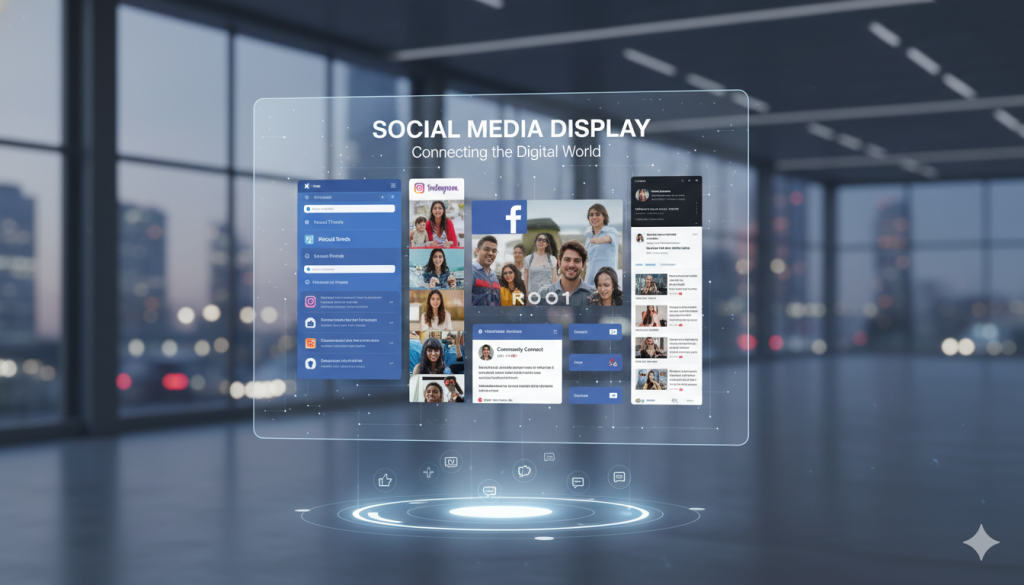
A social media display is a real-time visual feed that aggregates and displays social media content on screens or websites to boost engagement, social proof, and brand interaction.
What Is a Social Media Display?
A social media display is a digital screen or embedded feed that shows live or curated content from social media platforms such as Instagram, X (Twitter), TikTok, YouTube, and Facebook. It pulls posts based on hashtags, mentions, handles, or keywords and displays them in real time on screens, websites, or digital signage.
Social media displays are widely used at events, conferences, retail stores, corporate offices, websites, and public venues to showcase authentic user-generated content (UGC), encourage participation, and increase audience engagement.
Unlike static digital signage, a social media display is dynamic, interactive, and community-driven, making audiences part of the experience rather than passive viewers.
How Does a Social Media Display Work?
At a high level, a social media display board works in four simple stages:

- Content Collection
The system collects posts from selected social platforms using hashtags, mentions, tags, or account handles. - Moderation & Filtering
Content can be automatically or manually moderated to remove spam, inappropriate posts, or irrelevant content before display. - Customization & Branding
The display layout, theme, colors, fonts, animations, and branding elements are customized to match the event or brand identity. - Live Display & Analytics
Approved content appears in real time on screens or web pages, while analytics track engagement, reach, and participation.
This workflow ensures that only relevant, brand-safe, and engaging content reaches the audience.
Social Media Display vs Social Media Wall
The terms social media display and social media wall are often used interchangeably, but there is a subtle difference:
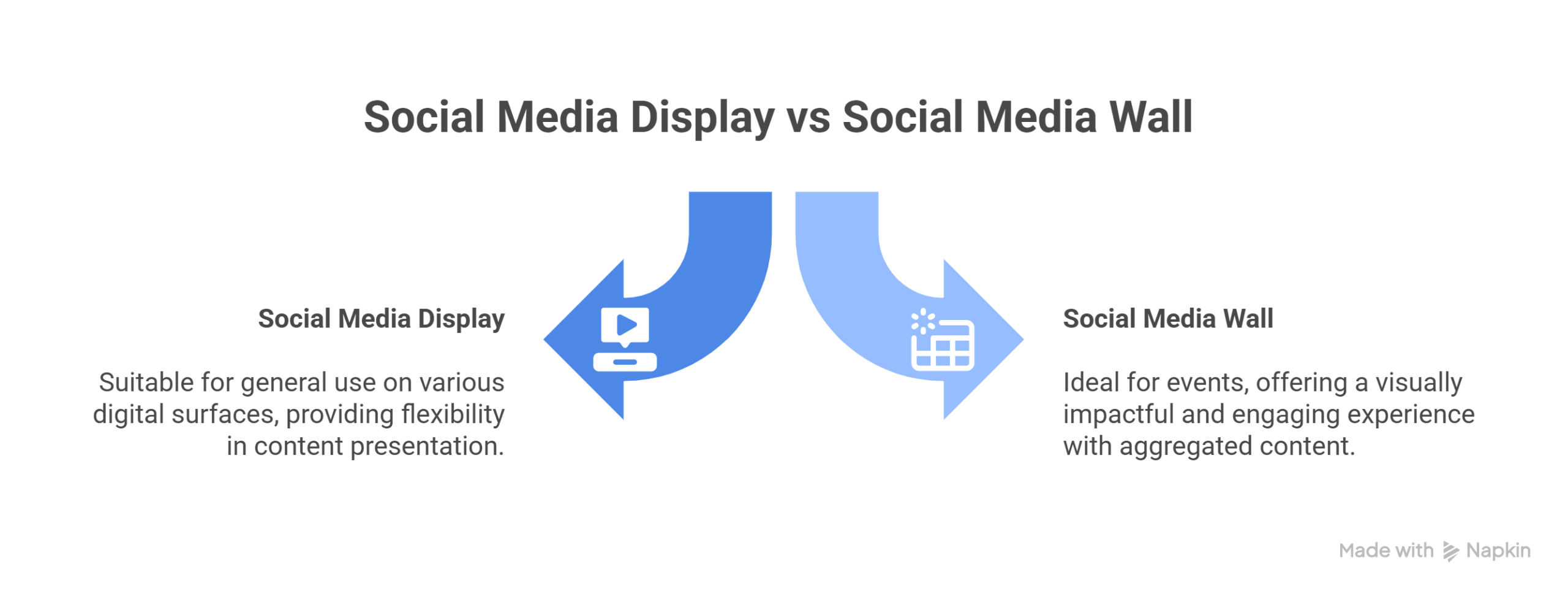
- A social media display refers to the broader concept of showing social content on any digital surface (screens, websites, kiosks).
- A social media wall typically refers to a large, visually prominent screen (often at events) displaying aggregated social content in a grid or carousel format.
In practice, most modern platforms support both use cases under one solution.
Why Social Media Displays Matter in 2026
As digital audiences become more selective, authentic content and real-time interaction have become critical for attention and trust. Social media displays sit at the intersection of both.
Audience Engagement & Real-Time Interaction
People are far more likely to engage when they see their own content featured publicly. A live social media display creates instant excitement, encourages participation, and keeps audiences actively involved throughout an event or experience.
Social Proof & Trust Building
Displaying real posts from real people builds credibility. When potential customers see others talking about a brand, product, or event, it reduces skepticism and increases confidence.
Brand Visibility Across Touchpoints
Social media displays extend the life of social content beyond mobile screens by placing it in high-visibility environments—event stages, store entrances, lobbies, websites, and more.
Types of Social Media Displays
Not all social media displays serve the same purpose. The format often depends on where and how the display is used.
Event Social Media Displays

These are the most common and impactful use cases. Event displays show live posts from attendees using the event hashtag, posting photos, videos, or comments.
Common at:
- Conferences & summits
- Trade shows & expos
- Product launches
- Festivals & concerts
They help amplify reach, encourage posting, and create a shared experience.
Website Social Media Displays
Website-based social media displays embed curated live social feeds directly into landing pages, homepages, or product pages.
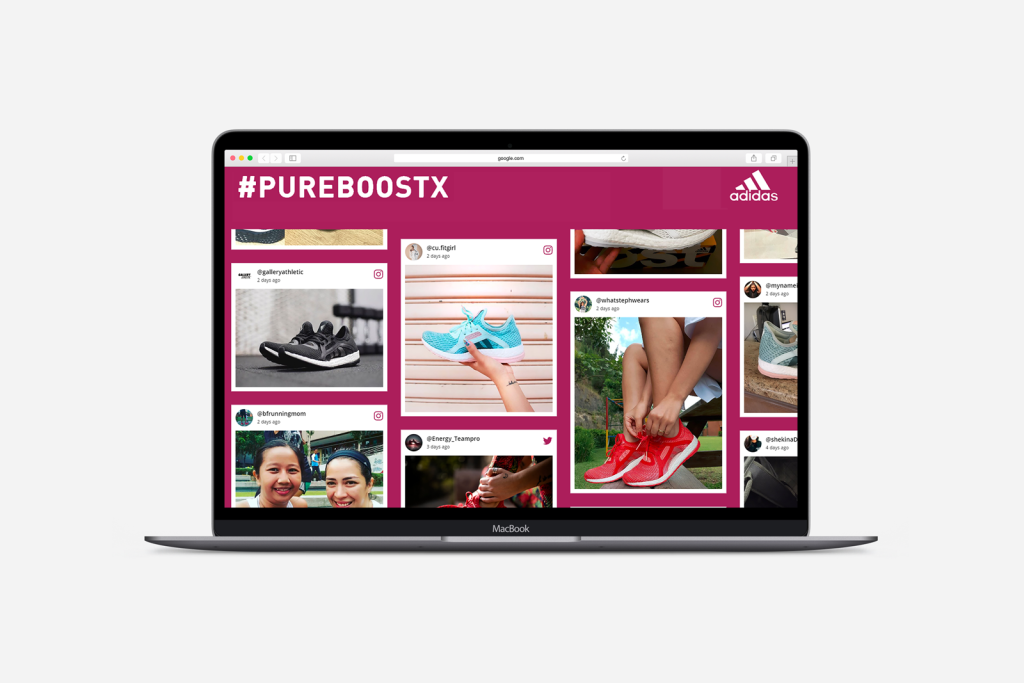
Key benefits:
- Adds fresh, dynamic content
- Improves trust and conversions
- Increases dwell time and engagement
These are especially effective for ecommerce, SaaS, and brand websites.
In-Store & Digital Signage Displays
Retailers and physical venues use social media displays on digital screens to showcase customer reviews, influencer posts, and campaign hashtags.

Common locations:
- Store entrances
- Checkout areas
- Mall displays
- Restaurants & cafes
This bridges online engagement with offline purchasing behavior.
Hybrid & Multi-Screen Displays
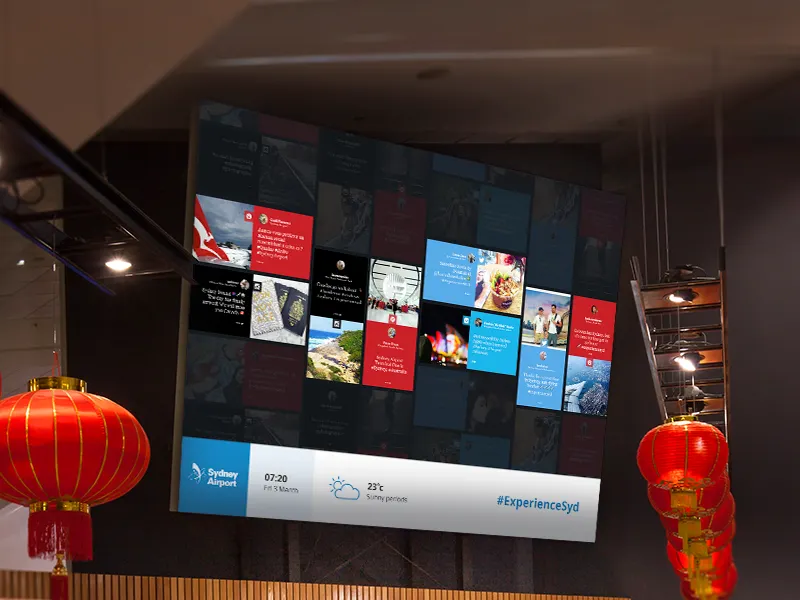
Hybrid displays combine event screens, websites, kiosks, and mobile views into a single ecosystem. Content submitted from anywhere can appear across multiple touchpoints simultaneously.
This approach is increasingly popular for large-scale events and enterprise brands.
Where Can You Use a Social Media Display?
Social media displays are highly flexible and can be adapted to almost any environment.
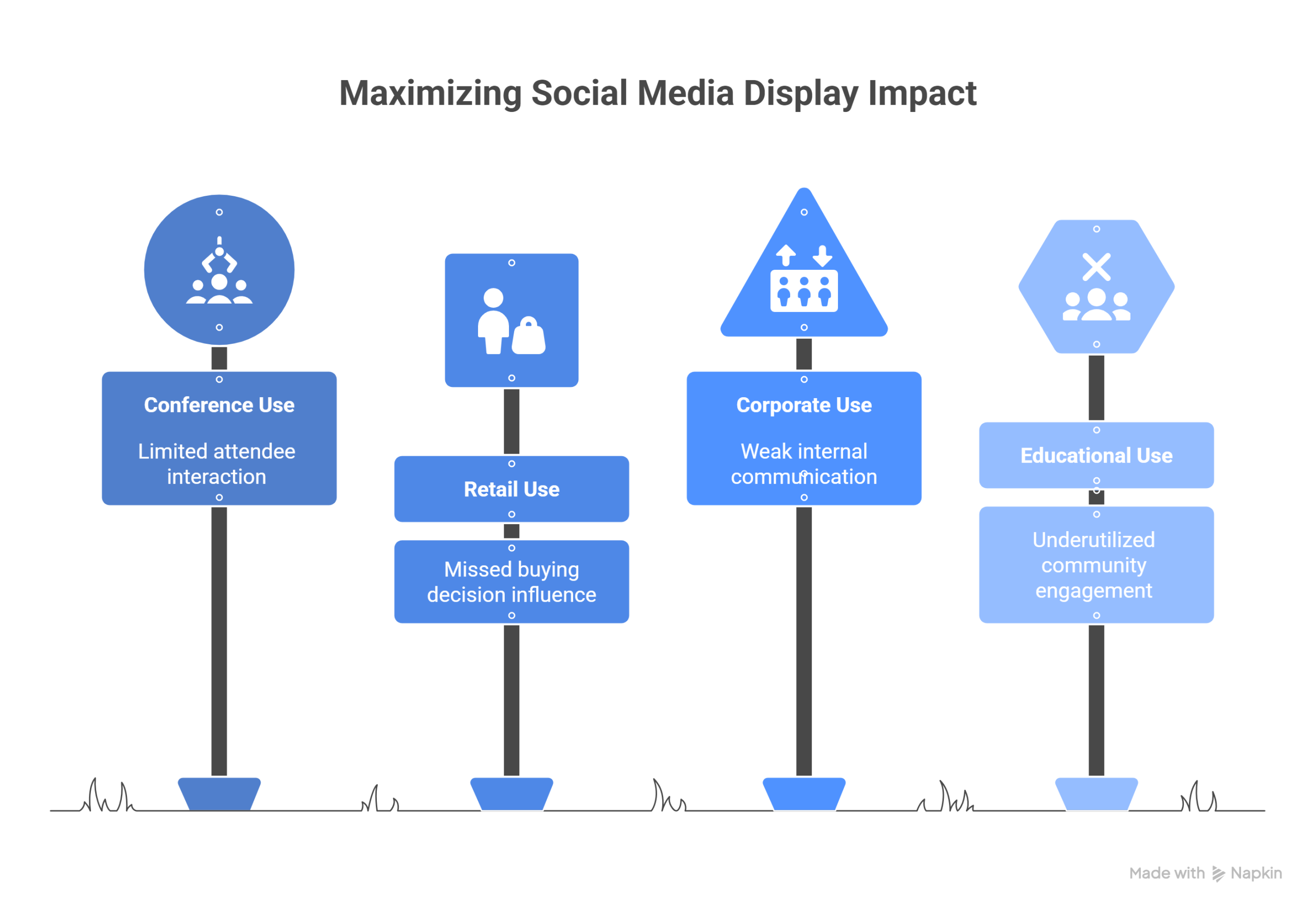
Conferences, Trade Shows & Live Events
Encourage attendees to post, interact, and network while amplifying the event’s digital reach.
Retail Stores, Malls & Restaurants
Show real customer experiences, seasonal campaigns, and influencer collaborations to influence buying decisions.
Corporate Offices & Internal Communications
Display employee posts, achievements, internal announcements, and company culture highlights.
Educational Institutions & Public Venues
Highlight student activities, campus events, community engagement, and public announcements.
Benefits of Using a Social Media Display
Boosts Engagement & Participation
Audiences are more likely to post and interact when they know their content may be featured live.
Encourages User-Generated Content (UGC)
UGC fuels organic reach, reduces content creation costs, and builds authenticity.
Increases Dwell Time & Brand Recall
Dynamic displays capture attention longer than static visuals, leading to higher recall.
Provides Real-Time Campaign Insights
Analytics reveal what content performs best, who is engaging, and how audiences respond.
Key Features of an Effective Social Media Display
Not all social media displays deliver the same impact. The effectiveness depends largely on the features powering the experience behind the screen.
Real-Time Content Aggregation
A strong social media display collects content from multiple platforms in real time. This includes posts created using event hashtags, brand mentions, tagged profiles, or direct uploads via QR codes.
Real-time aggregation keeps the display fresh and relevant, encouraging more people to participate when they see new content appearing instantly.
Moderation & Content Filtering
Moderation is essential for brand safety and relevance.
An effective social media display allows:
- Manual approval of posts
- Automated filtering for profanity or spam
- Blacklisting specific keywords or users
This ensures that only high-quality, on-brand content appears on screens or websites, especially in public or professional environments.
Customization & Branding Options
Customization helps the display feel like a natural extension of the brand or event.
Key customization elements include:
- Layout styles (grid, carousel, masonry, ticker)
- Fonts, colors, and themes
- Background images or videos
- Brand logos and sponsor placements
Well-branded displays look intentional rather than generic.
Interactive Engagement Tools
Modern social media displays go beyond passive viewing. Interactive elements significantly increase participation and dwell time.
Common engagement tools include:
- Live polls and voting
- Q&A modules
- Announcements and tickers
- Spotlighting featured posts
- QR-based photo booths or direct uploads
These tools turn a social media display into a two-way communication channel.
Analytics & Performance Tracking
Analytics help measure real impact rather than vanity metrics.
Useful insights include:
- Number of posts displayed
- Engagement rate
- Most active contributors
- Platform-wise performance
- Peak participation times
These insights help brands and organizers refine future campaigns.
How to Create a Social Media Display (Step-by-Step)
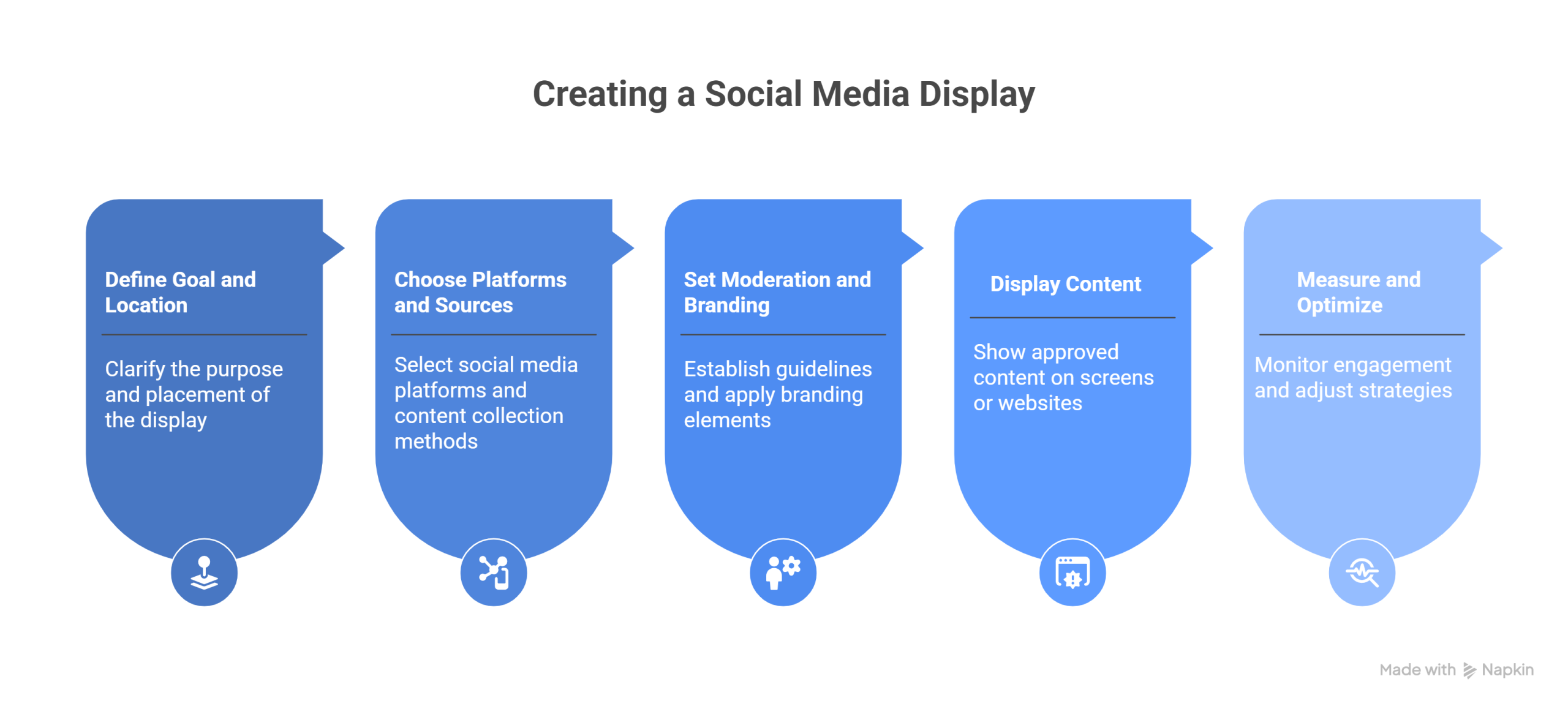
Time needed: 5 minutes
Creating a social media display does not require technical expertise when approached systematically.
- Define Your Goal and Display Location
Start by clarifying why you need the display:
#1 Increase event engagement?
#2 Build social proof on a website?
#3 Drive in-store participation?
Also define where it will appear:
#1 Large LED screen
#2 Website embed
#3 Digital signage
#4 Multiple locations
Clear goals influence content strategy and layout decisions. - Choose Social Platforms and Content Sources
Select the platforms your audience actually uses. Common choices include:
#1 Instagram for visual content
#2 X (Twitter) for live conversations
#3 TikTok for short-form videos
#4 YouTube for longer video highlights
Decide whether content will be collected via hashtags, mentions, handles, - Set Moderation and Branding Rules
Before going live:
#1Define moderation guidelines
#2Set approval workflows
#3 Apply brand colors and themes
#4 Add logos or sponsor elements if required
This prevents issues once the display is live. - Display Content on Screens or Website
Once approved, content can be displayed:
#1 On event screens in real time
#2 Embedded into landing pages or homepages
#3 Shown on in-store displays or kiosks
Ensure the display is visible, readable, and placed where it naturally attracts attention - Measure Engagement and Optimize
After launch:
#1 Monitor analytics
#2 Identify top-performing content
#3 Encourage more participation using CTAs
#4 Adjust themes or layouts if needed
Optimization ensures sustained engage throughout the campaign or event
Social Media Display Examples & Real-World Use Cases
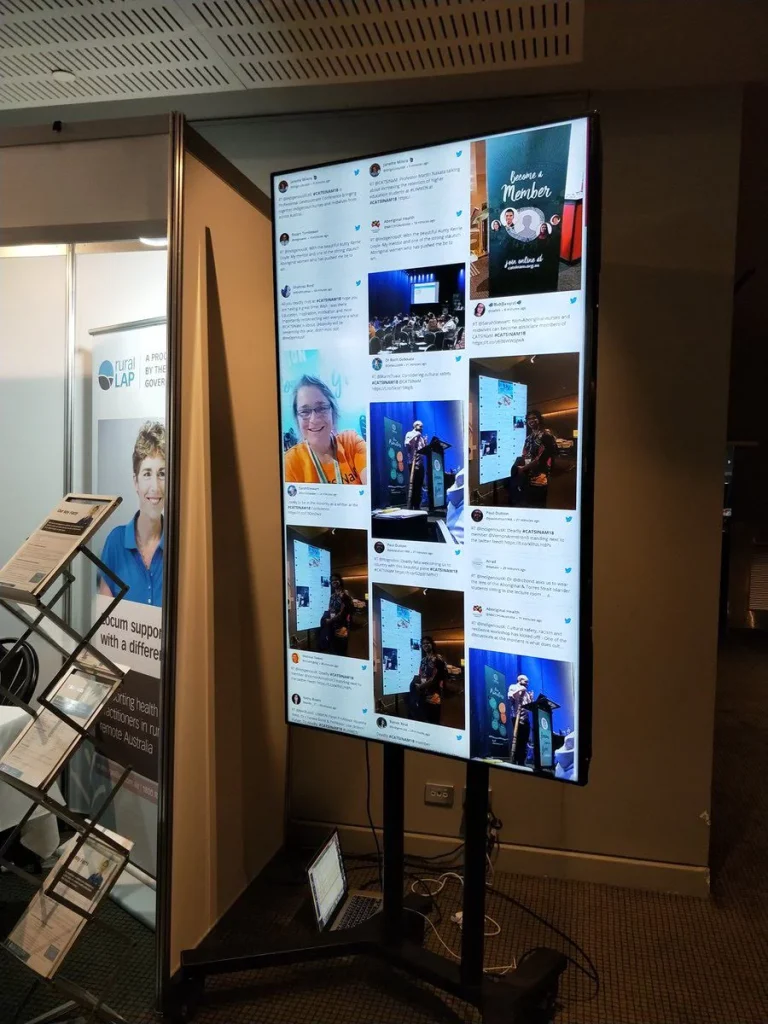
Event Social Media Display Example
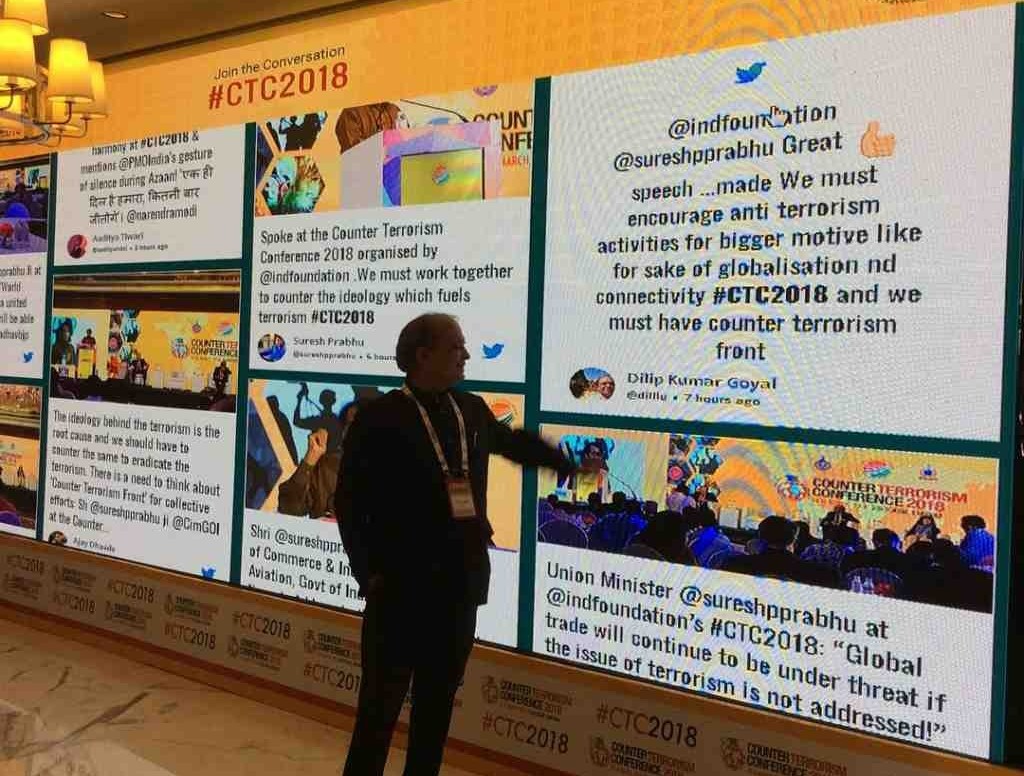
At conferences and exhibitions, social media displays often show:
- Attendee photos
- Live twitter feed
- Speaker quotes
- Event highlights
This creates FOMO, encourages networking, and amplifies event reach beyond physical attendees.
Website Social Proof Example
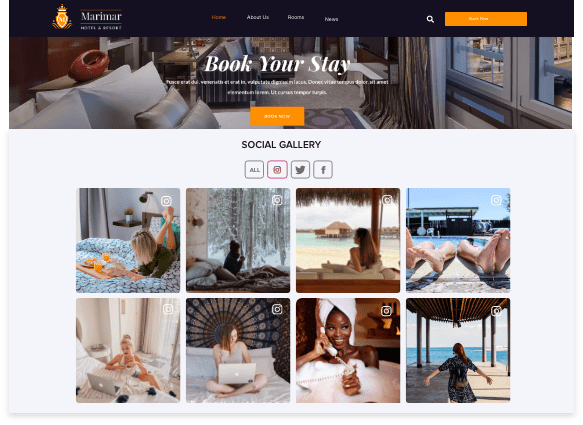
Brands embed social media displays on:
- Homepage hero sections
- Product pages
- Testimonials pages
Seeing real customer content builds trust and reduces friction during purchase decisions.
Retail Store Engagement Example
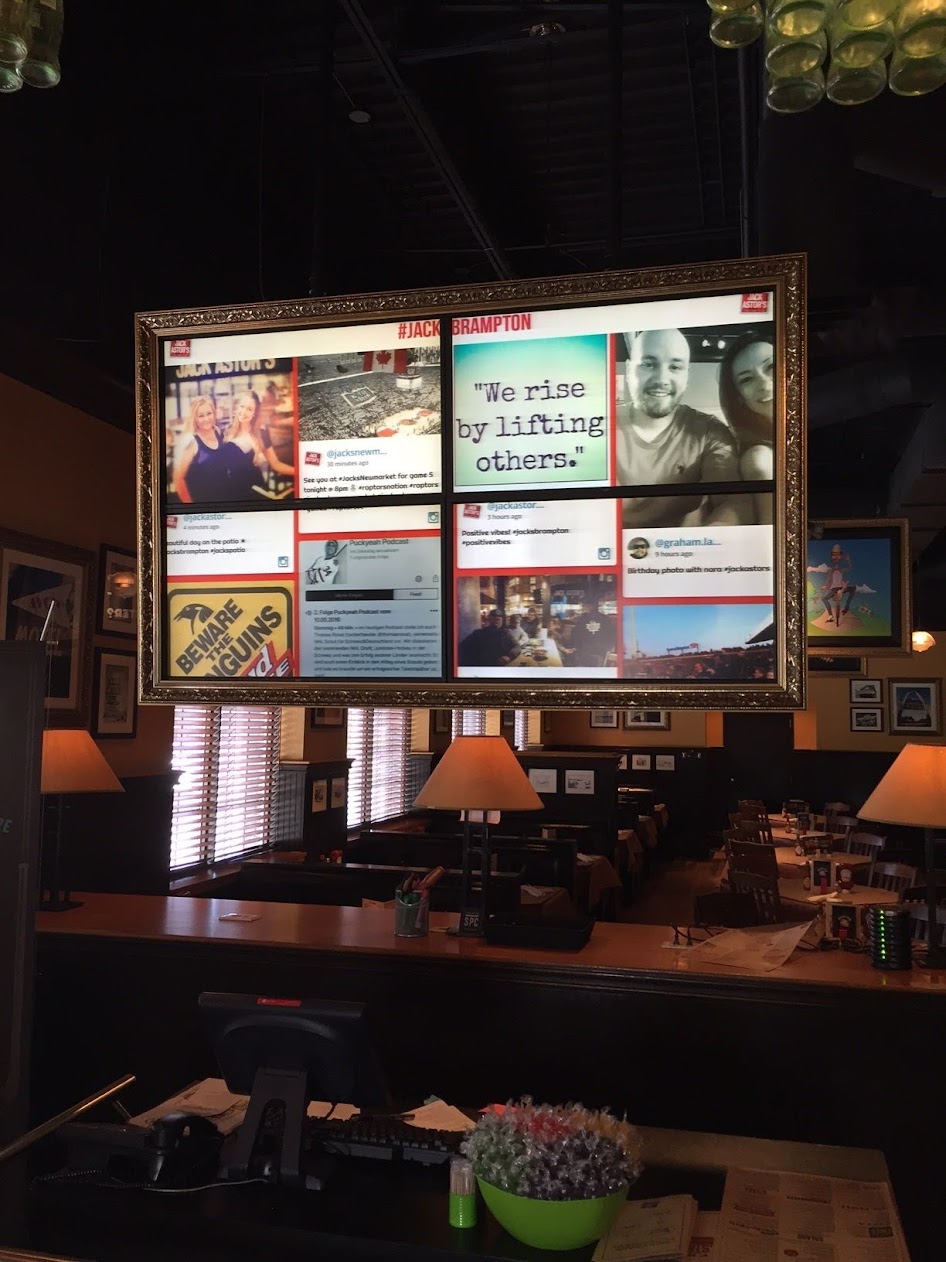
Retail stores use social media displays to:
- Showcase customer reviews
- Highlight influencer collaborations
- Promote seasonal campaigns
This blends online advocacy with offline buying behavior.
Social Media Display Screens for Internal Employee Engagement
Organizations display:
- Employee achievements
- Internal campaign posts
- Culture highlights
This strengthens morale and encourages participation in internal initiatives.
Best Practices for Social Media Displays
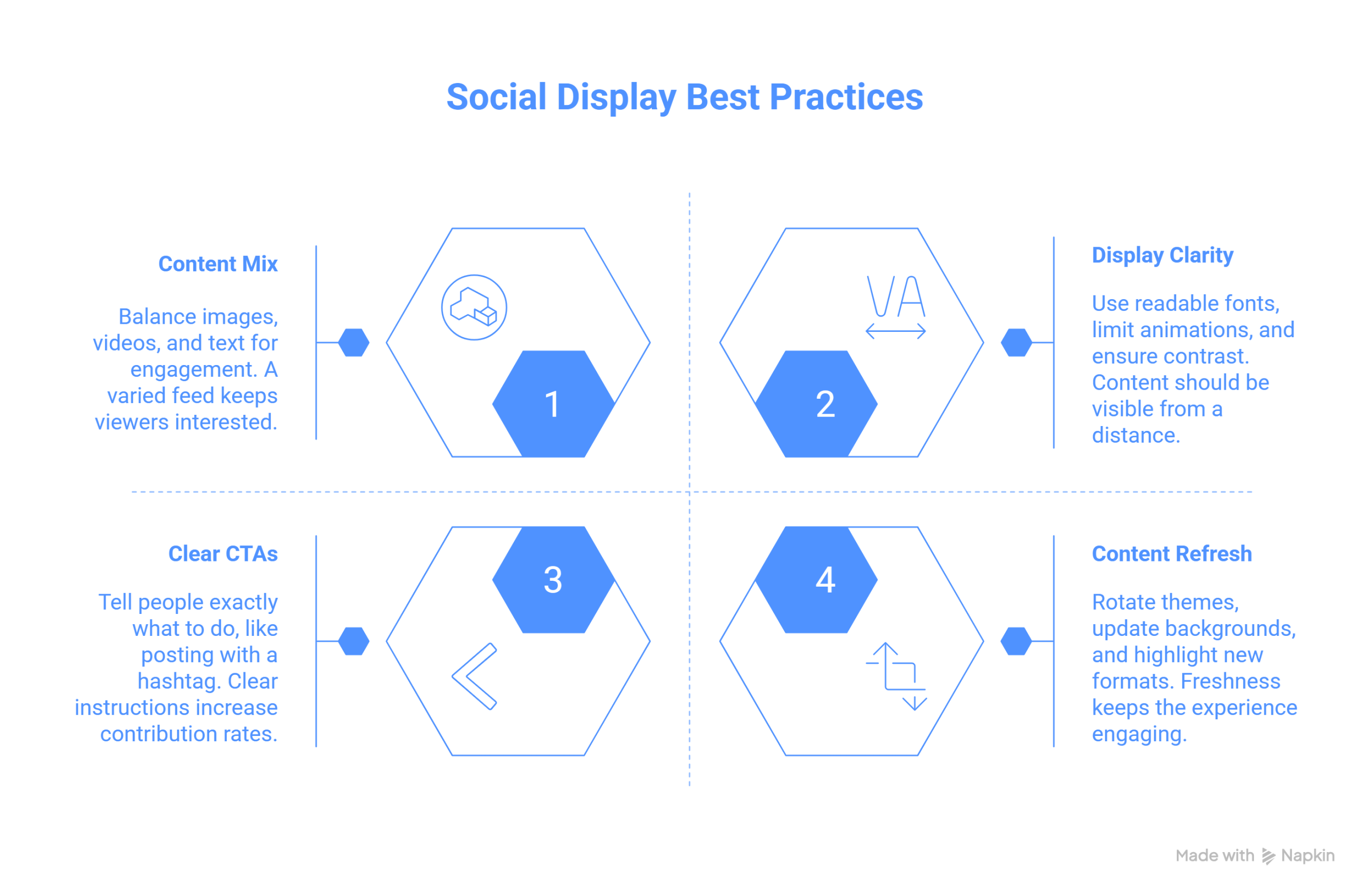
Choose the Right Social Display with Content Mix
Balance different content types:
- Images for visual impact
- Short videos for storytelling
- Text posts for opinions and reactions
A varied feed keeps viewers interested longer.
Keep Displays Clean and Readable
Avoid clutter:
- Use readable font sizes
- Limit excessive animations
- Ensure sufficient contrast
The content should be visible even from a distance.
Use Clear CTAs to Drive Participation
Tell people exactly what to do:
- “Post using #EventHashtag”
- “Scan the QR code to appear on screen”
- “Share your experience”
Clear instructions increase contribution rates.
Refresh Content and Themes Regularly
For long-running campaigns:
- Rotate themes
- Update backgrounds
- Highlight new content formats
Freshness keeps the experience engaging.
Frequently Asked Questions About Social Media Displays
A social media display is used to showcase real-time or curated social media content on screens or websites. It helps increase engagement, encourage user participation, build social proof, and amplify brand visibility across events, venues, and digital platforms.
A social media display collects posts from selected platforms using hashtags, mentions, or handles. After moderation, approved content is instantly displayed on screens or embedded pages, updating automatically as new posts are published.
Yes. Most modern social media displays offer both automated and manual moderation. This allows brands and organizers to filter spam, block inappropriate content, and approve only relevant posts before they go live.
Social media displays typically support platforms such as Instagram, X (Twitter), TikTok, YouTube, and Facebook. Some solutions also allow direct uploads via QR codes or custom forms.
Absolutely. Social media displays work well for both physical events and digital touchpoints like websites, landing pages, and ecommerce stores. The format can be adapted depending on the use case.
Expert Insights & Real-World Experience
How Brands and Event Organizers Use Social Media Displays Successfully
From first-hand experience working with event marketers and brands, social media displays consistently deliver higher engagement when they are positioned as interactive experiences, not just visual screens.
For example:
- Events that actively encourage posting with clear CTAs see significantly more participation.
- Displays that highlight attendee content rather than brand-only posts feel more authentic.
- Real-time moderation ensures quality without slowing down engagement.
Mini Case Insight: Event Engagement Through Live Displays
At large conferences, organizers often use social media displays near registration desks or main stages. As attendees see their posts appear live, participation increases throughout the day. This not only boosts social reach but also creates a sense of community and shared experience among attendees.
The key takeaway: visibility drives contribution, and contribution drives engagement.
Turn Social Buzz Into Real Engagement
Social media displays transform everyday social posts into powerful, real-time experiences. Whether you’re hosting an event, running a campaign, or building trust on your website, a well-executed social media display helps you connect, engage, and convert.
Start showcasing live social content and make your audience part of the story.
👉 Start Your Social Media Display Today – Register Today